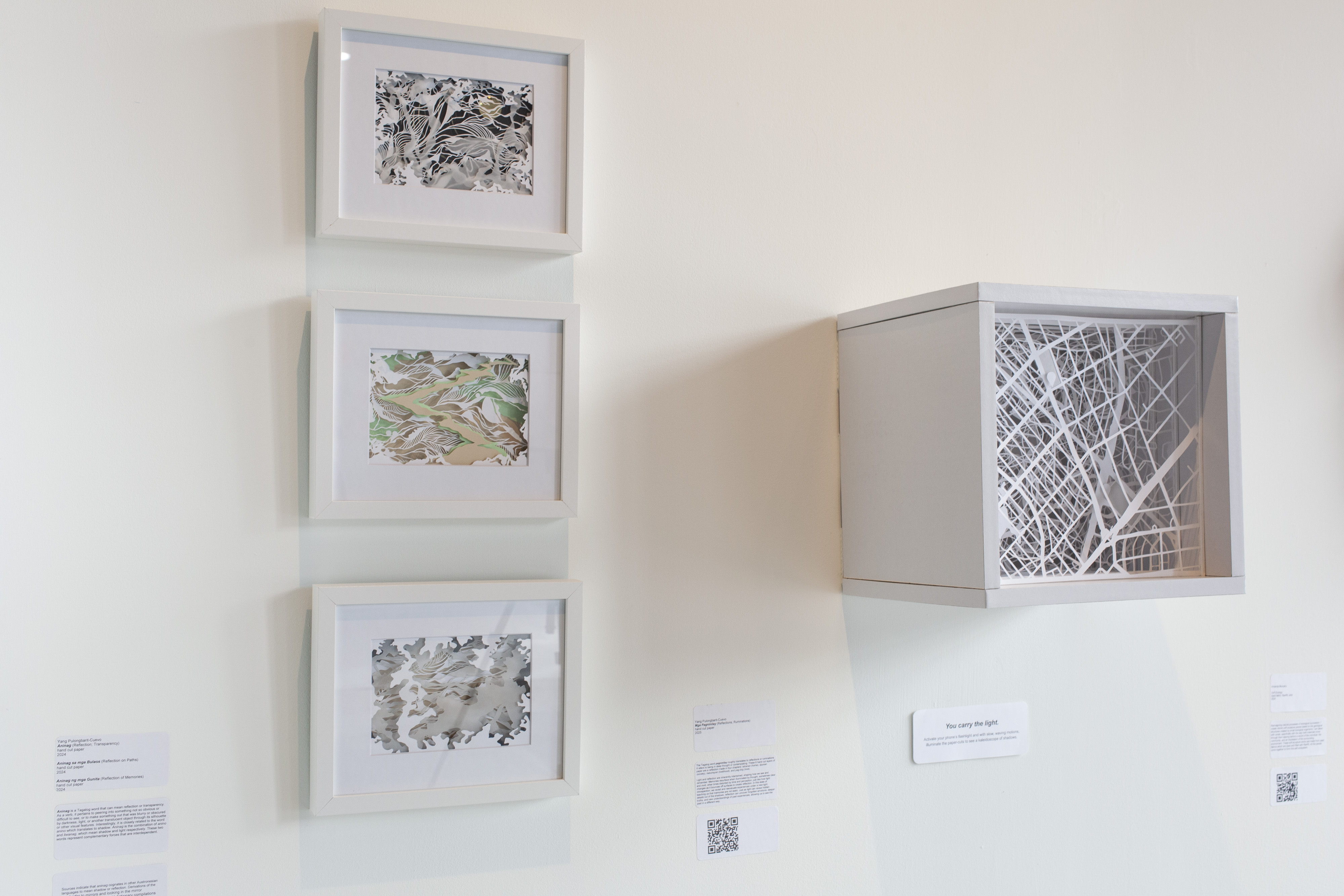
Aninag (reflection, transparency)
2024
hand-cut paper
10.75 W × 8.75 H × 1.125 D inches framed
Aninag is a Tagalog word that can mean reflection or transparency. As a verb, it pertains to peering into something not so obvious or difficult to see, or to make something out that was blurry or obscured by darkness, light, or another translucent object through its silhouette or other visual features. Interestingly, it is closely related to the word “anino” which translates to shadow. Aninag is the combination of anino and liwanag, which mean shadow and light respectively. These two words represent complementary forces that are interdependent.
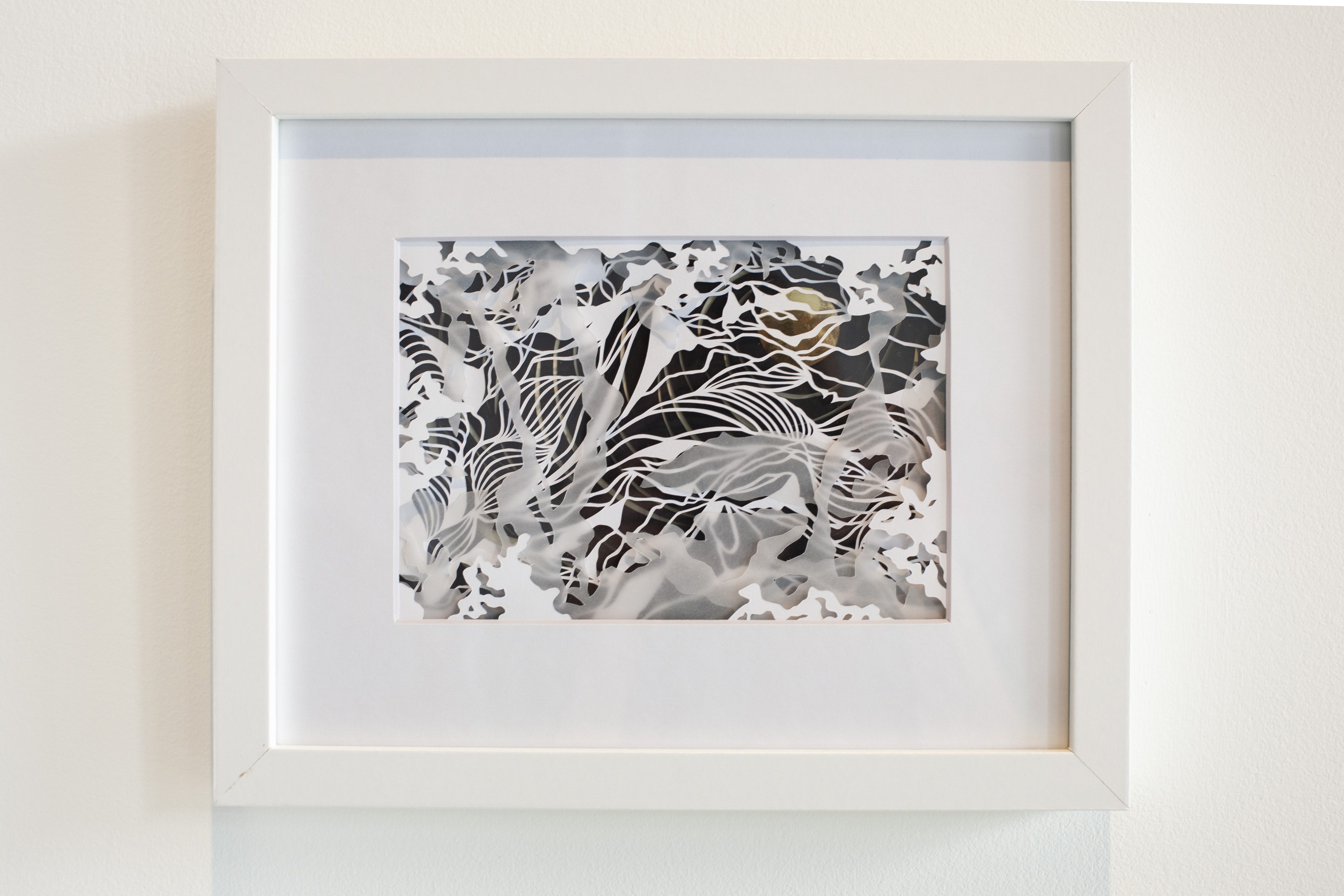
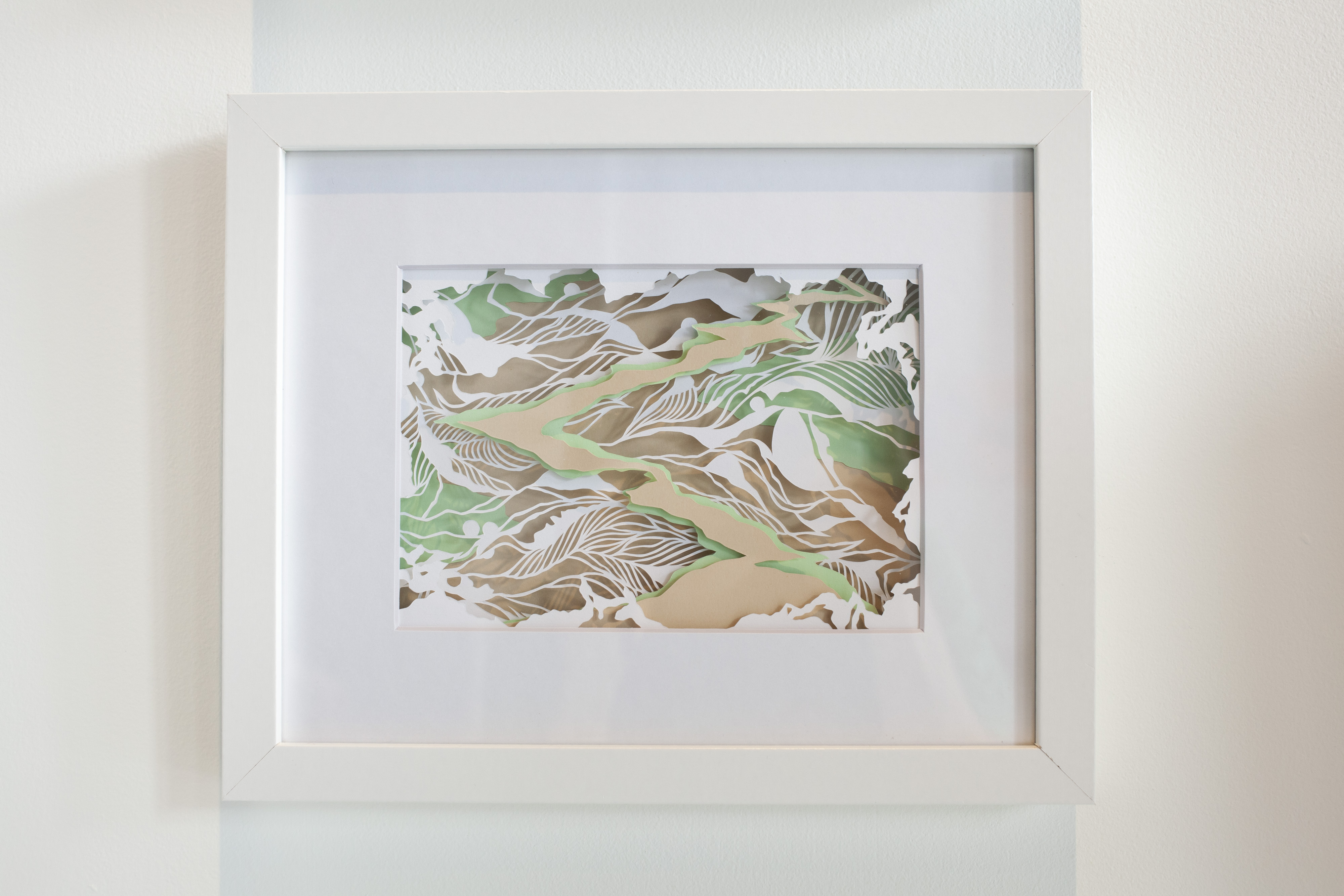
Aninag sa mga Bulaos (reflection on paths)
2024
hand-cut paper
10.75 W × 8.75 H × 1.125 D inches framed
Bulaos refers to the trail or narrow path that leads to another place. More specifically, it is the footpath made by animals on the way to a watering place in a forest. The word bears this meaning in the Bulakenyo dialect from the Philippines. The Philippines has 130-195 spoken languages and dialects, which is why some words may carry multiple meanings across regions. In the main Filipino language, bulaos also means roar.
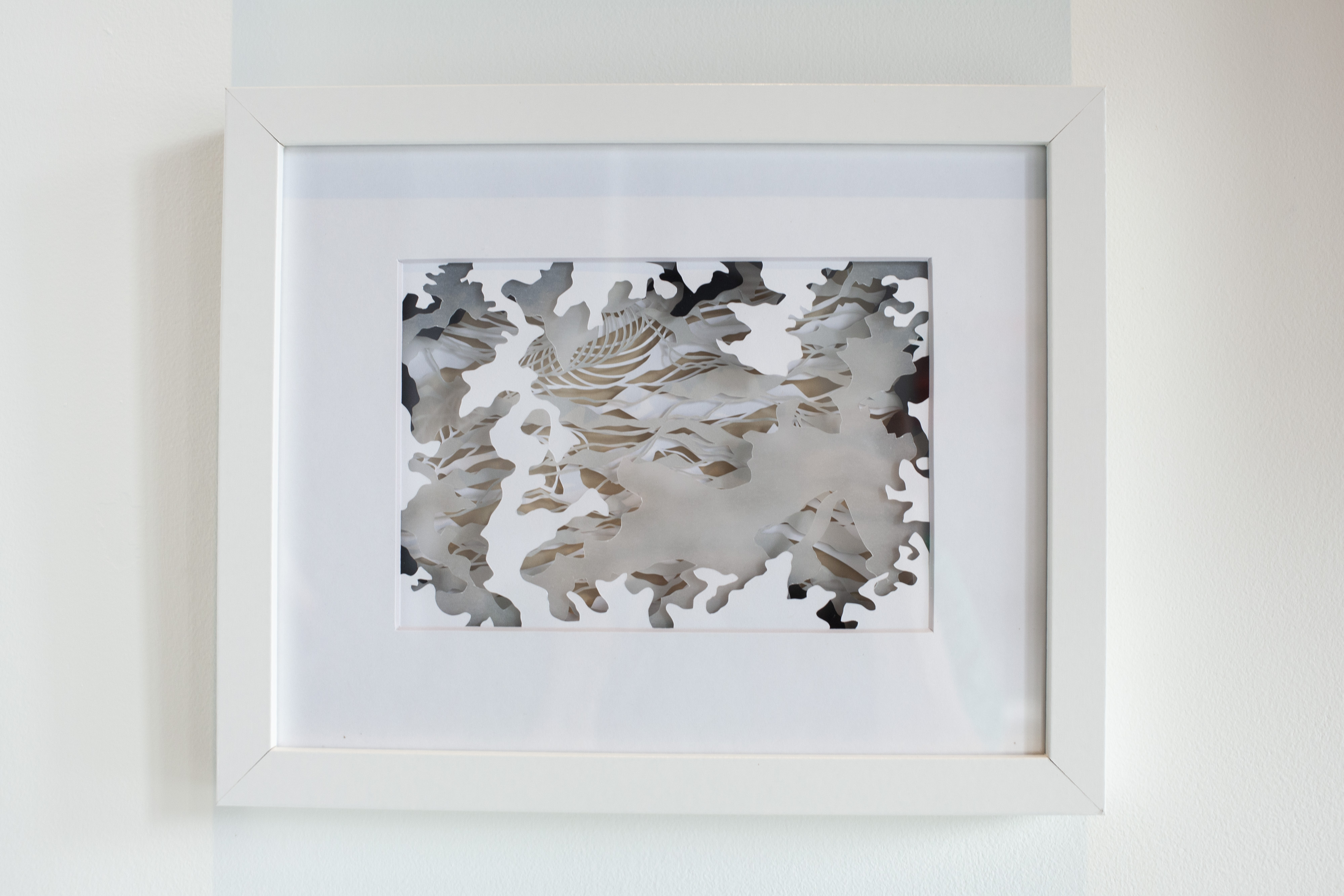
Aninag ng mga Gunita (reflection of memories)
2024
hand-cut paper
10.75 W × 8.75 H × 1.125 D inches framed
Gunita is a Tagalog word that means recollection or memory. It is related to reminiscence or reflection, and carries a sense of fondness for past experiences. It is used to reflect or think back on cherished memories or significant moments in one’s life. Sources indicate that aninag cognates in other Austronesian languages to mean shadow or reflection. Derivations of the word refer to mirrors and looking in the mirror according to a research of old dictionary compilations from 1754. The words pagninilay and aninag therefore infer reflection in different ways.
Photography by Kimmy Noonen

